Specialised software is essential for textile printing to manage colour accuracy, separations, and complex repeating patterns across fabric rolls. While standard tools like Adobe Photoshop/Illustrator are starting points, dedicated solutions like Inèdit (NeoStampa), Nedgraphics, Optitex, and AVA CAD/CAM offer essential plug-ins and RIPs. These tools streamline workflows, enable precise colour matching, and optimise fabric utilisation for diverse applications, from apparel to home furnishings.
Graphic design is an important part of the print process, whether that means creating an image from scratch or working on customer files. This is equally true of textile printing, but there can be some additional challenges depending on the particular textile application in hand. This is partly to do with the ways that printing inks interact with fabric, but mainly down to the need to specify colours, as well as repeating patterns across the width of a roll, and matching those patterns to particular applications.
So, for example, images destined for inkjet DtG or DtF printing can generally be prepared with any standard design software as the image will occupy only a small part of the t-shirt or end product. The same is true for t-shirts and so on that will be screen printed, but with the caveat that many designers prefer to limit the number of colours, partly to produce a starker, more impactful design, but also to reduce the number of screens used and therefore the cost of production.
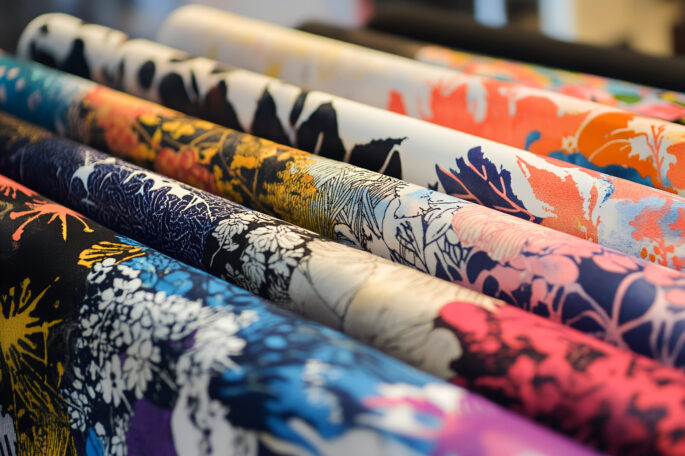
But there are distinct design challenges in printing a roll of fabric, which mostly involves step and repeating patterns across the whole width. Designers need the freedom to play around with the basic motif, to adjust the sizing, the way that it repeats horizontally and vertically, the spacing between the repeats, the way that it wraps around between the tiles from one side to the other. In most cases this all has to be tested against different applications, from apparel to home furnishings to see how well the pattern works.
Naturally the design will also include tweaking the colours to offer different variations within the overall design. And designers will also have to test how the colours within any given design will be affected by the colour channels available on different printers.
A good starting point is Adobe’s professional graphic design tools, especially Illustrator for vector artwork and Photoshop for bitmap images, both of which have been refined over many generations. These also benefit from tight integration with Adobe’s PDF Print Engine, which forms the basis of many of the RIPs used in wide format and textile printing.
Adobe itself has developed the Textile Designer plug-in for Photoshop. This is a set of tools that allows designers to turn images into repeating patterns, including wrapping images from one side of a tile back to the other. It includes colour editing tools and the ability to define the colourway or colour scheme you want to work with and the colour separations.
In addition, there are a number of software developers that specialise in textile design and many of these also offer plug-ins for Adobe’s software. This includes the Spanish company Inèdit, which makes the NeoStampa RIP that is used to drive many inkjet textile printers. Inèdit sells several Photoshop plug-ins, including nT Step & Repeat, which is used to create repeating patterns with a number of parameters that can be adjusted such as the sizing and spacing of the repeating motifs. There’s also nT Masquerade for creating separations, and nT Colorations for generating different variations in the colour of your design patterns.
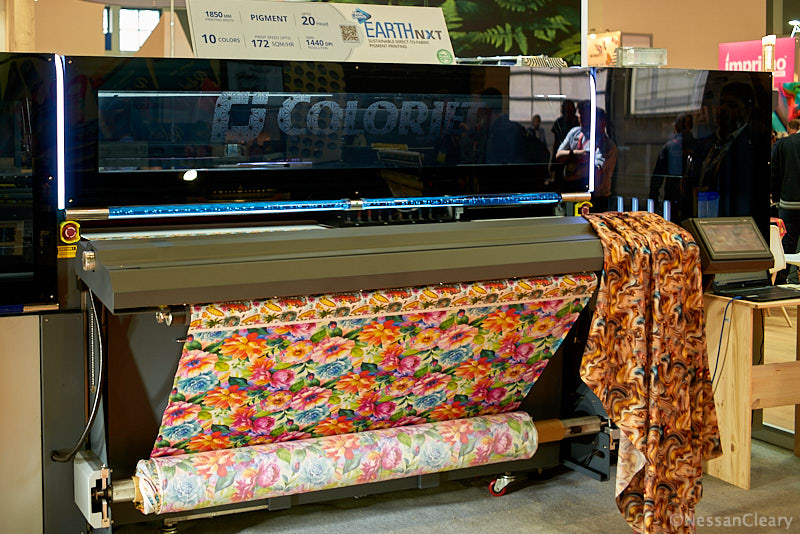
NeoStampa is a fully featured RIP and digital front end for textile printing. It’s compatible with most of the major textile printers, with the promise that it can produce the same colours from a given file regardless of which print engine is used. It includes colour management and will also manage job queues and will track the ink consumption for each job to give a rough idea of the print cost of that job. Inèdit also offers a separate colour management tool, neoMatch, which can create LAB colour values from colour libraries and spectral measurements of samples.
Inèdit itself has been owned by EFI Reggiani for the last few years but has just been acquired by Fiery, which should make it more attractive to printer OEMs looking for a more neutral software partner. Fiery already sells the Digital Factory RIP, which is available in different flavours to support direct-to-film, direct-to-garment and dye sublimation printing.
Nedgraphics, which is owned by Fog Software, also produces a number of Adobe plug-ins, but in this case mostly for Illustrator. This includes plug-ins for apparel design, with Colorist offering the ability to create multiple colorways from a single design while Sketch and Fill helps designers fill in garments and generate stitch lines. Color Utilities organises colours, patterns and seasonal palettes across design teams, while Repeat creates repeat patterns in either Illustrator or Photoshop. Nedgraphics also sells the Photoshop plug-in, Textile Design Software. This takes advantage of Photoshop’s ability to create colorways from AI prompts, allowing designers to match the colour scheme to specific themes.
Leaving the plug-ins aside, Nedgraphics main software is split into a number of modules, that are then used as the basis to create different Studios aimed at specific applications such as digitally-printed fabrics, knitwear or carpets.
Fog Software also owns Optitex, which mainly caters for garment designers. This includes a 3D Design plug-in for Illustrator to show how apparel designs will look in the round and which allows designers to play around with different fabrics and textures in Illustrator. Optitex also sells Print and Cut, which can arrange the different pieces of a garment on a roll to optimise the layout, and Marker, which nests different pieces together to minimise any fabric waste on a roll.
Another alternative is the British developer AVA CAD/CAM, which produces software for specific industries, such as flooring and ceramic tiles, as well as textiles. The textile offering is split into different applications, from apparel to home furnishings to create solutions that are highly relevant to each market sector despite using the same core software. For example, the Fashion/ Apparel edition is made up of different modules, which includes elements for design, colour and separations as well as the print output. The company stresses its main benefit is the degree of training and support that it offers its customers.
So, in conclusion, there is a broad range of software available for textile production that covers everything from design through to prepress and printing, with specific variations for the different applications that make up the printed textiles market.
Discover more on textile