A decade after their launch, the UN Sustainable Development Goals face significant challenges, with only 35% of targets on track. Despite global turmoil, the SDGs remains vital for businesses. As regulations like the EU’s CSRD evolve, companies are moving past political shifts and “greenhushing” to integrate these goals into resilient supply chains.
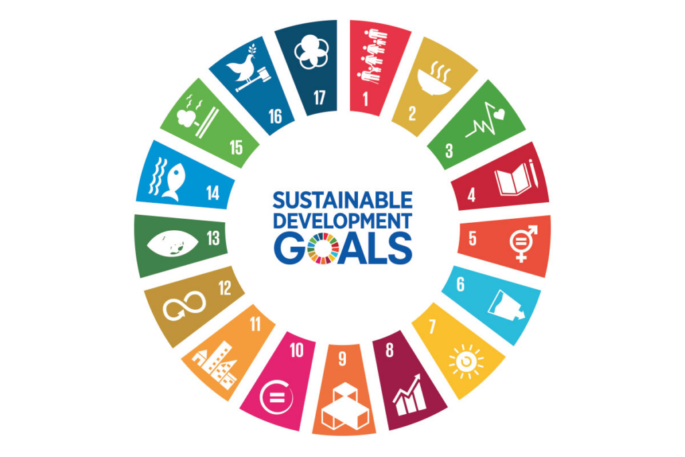
For those not familiar with them, the United Nations Sustainable Development Goals were adopted in 2015 by all United Nations member states, with the aim of ending poverty, improving health and education, spurring economic growth and protecting the environment on which all this relies. There are 17 goals and 169 targets, most of which are to be achieved by 2030 (there are a few target dates that were earlier), with governments, regional authorities, businesses and individuals all playing a part. To learn more about each, see https://sdgs.un.org/goals
Ten years on seems a good time to have a look at their progress and their continued relevance to small businesses in a world in turmoil.
Progress on the goals has not matched the hope and expectations with which they were launched. Only 35% of targets either on track or making moderate progress, the rest either barely keeping up or actually falling back behind their baselines. Much of the work on them has been impeded by the global turmoil which, ironically many of the goals and targets are aimed at preventing or mitigating. The impacts of climate change, including natural disasters; inequalities, including extremes in uneven distribution of wealth; land degradation and desertification; lack of food and lack of justice all tend to drive mass migration, unrest and conflict.

There have been some very good outcomes so far, including reductions in HIV infections and malaria cases, improvements in children and youths receiving education, greater access to electricity (since 2023, 92% of the global population) and the internet. There have been many successes in biodiversity conservation, but biodiversity loss is still increasing globally. There has been regression on targets for international cooperation on water and sanitation, labour rights and safe working environments, elimination of discrimination, waste reduction, among others.
But the SDGs are more relevant than ever today.
Where businesses are involved
The goals and targets are broad, with some more suited to government or regional authority action and others to businesses and individuals. The top five goals registered globally as being actively worked on are life below water, partnerships for the goals, climate action, decent work and economic growth, and quality education. Looking specifically at the corporate world and sustainability reporting, those most often included are climate action and life on land, with actions and reporting on emissions and climate goals the most prevalent, but also governance, human rights, health and safety, and diversity. For smaller businesses, action taken is often driven by supply chain management criteria coming down the value chain as well as their own sustainability policies.
There may appear to be a scaling back of sustainability commitments amongst the global corporates since recent political changes, but findings from the CDP (previously Carbon Disclosure Project, but it has widened its remit) 2025 disclosure cycle, this is not so much a reduction in commitments and implementation but simply keeping quieter about them – the term they use is ‘greenhushing’. There have been a few high-profile companies who have changed their policies, but most are quietly keeping going, with a surge in companies adopting science-based targets for climate change and having them validated, and a surge in net zero targets. Political pendulums swing wildly and over shorter timescales, but business needs, environmental realities and consumer expectations are more consistent.
Within the EU, the omnibus proposals adopted for simplification include reporting under the Corporate Sustainability Reporting Directive. This will, among other changes, reduce data demands on smaller businesses within corporate supply chains. However, there is still a strong focus on ‘double materiality’ – the very large companies falling within the Directive must report on both how they affect people and the environment, and how sustainability issues affect their business. Which takes us right back to the Sustainable Development Goals, and their continuing relevance to business, including smaller businesses.
Discover more sustainable content on circular economy