Screenline is a Sri Lankan success story, evolving into a global leader in textile printing and heat transfers. Producing millions of units monthly for brands like Adidas and Levi’s, the company excels through automated production, sustainable innovation—using algae and tea pigments—and a resilient supply chain, setting a benchmark for international apparel decoration. Graeme Richardson-Locke, Head of Associations & Technical Lead at FESPA visited Screenline and shared his experience.
I recently visited Screenline’s one of Sri Lanka foremost textile printers production site in the Katunayake Export Processing Zone in Sri Lanka along with Janaka Rathnakumara, President – Sri Lanka Association of Printers (SLAP) and a group of the association’s Board of directors. We were offered a tour of a company that has progressed steadily from a small local operation in 1997 into a significant regional player in screen printing and Heat Transfer manufacturing. For printers across the screen, digital textile, and garment-decoration sectors, Screenline’s development provides a working example of how a business can adapt, modernise, and compete internationally.
We arrived to meet Nishantha Bakmeege, Screenline’s CEO who has grown the group into Sri Lanka’s largest screen printer and Heat Transfer producer, supplying major apparel brands in the United States, Europe, and Asia. The company’s growth reflects a consistent focus on process improvement, investment in people and technology, and a long-term commitment to customer service. Its stated vision is to become a global leader in screen printing and embellishment by adding value to international fashion and apparel brands clothing lines.
Screenline Holdings ability to compete internationally has been built on continuous investment in modern production systems. The business operates state-of-the-art design, colour, and R&D facilities, which work closely with production teams to shorten product and design development cycles to improve innovation and quality. They all collaborate to bring new decoration techniques to market quickly and maintain high quality consistency across large volume runs.
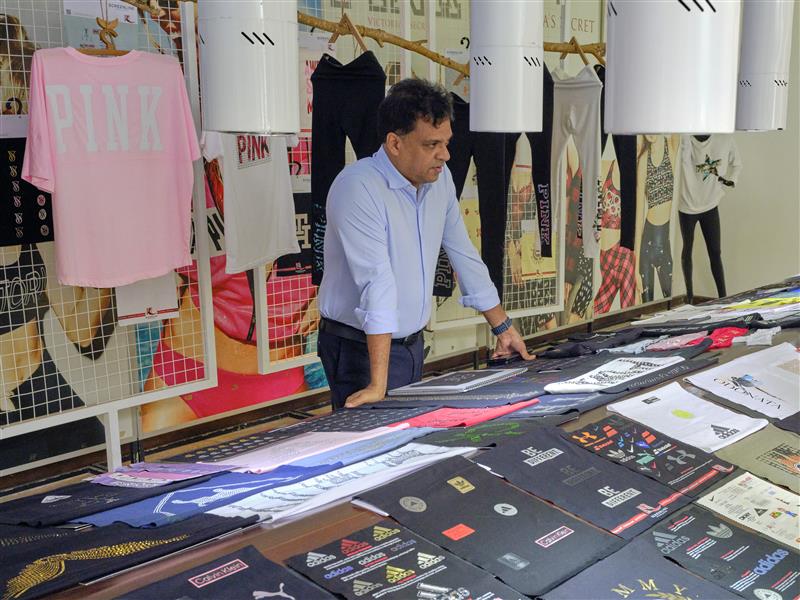
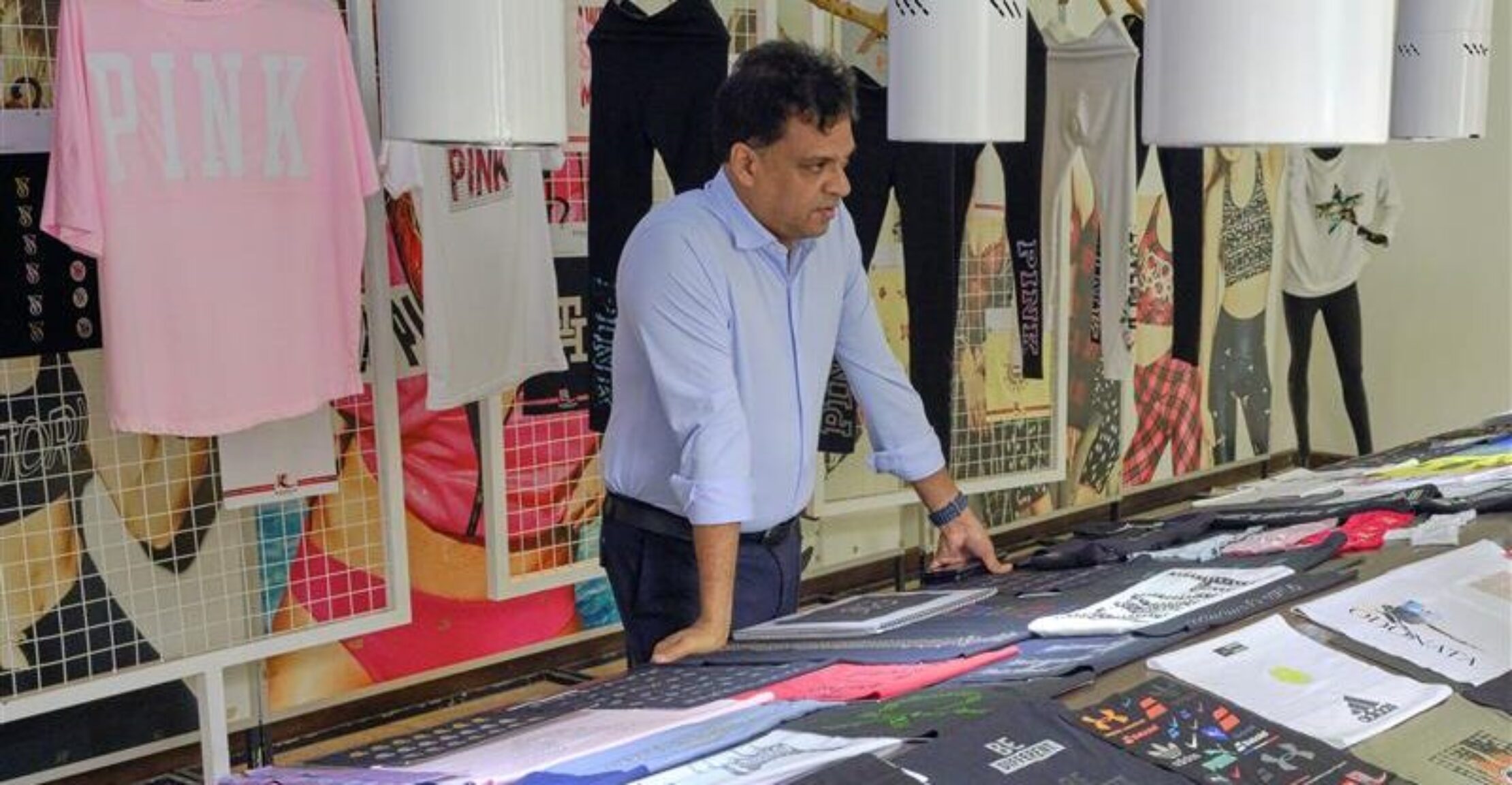
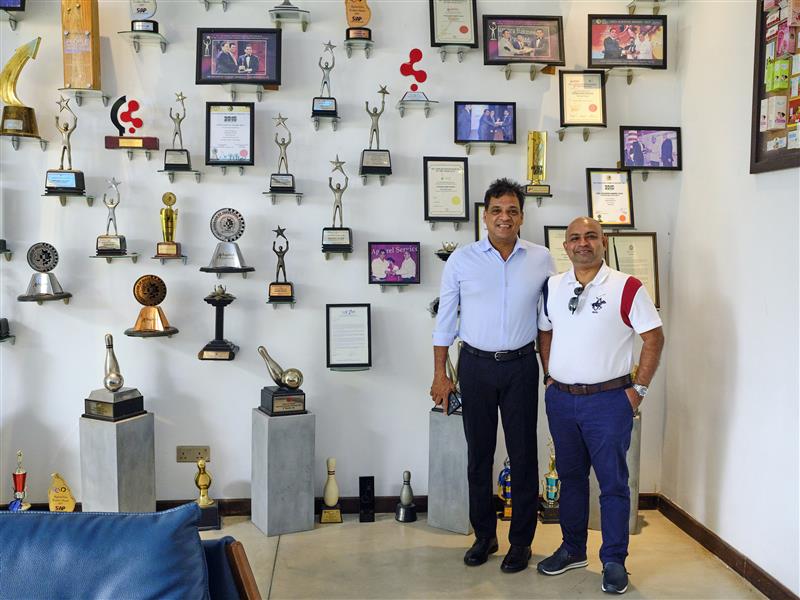
The first part of the tour was to the customer showroom, featuring mannequins dressed in athleisure-wear for well known global brands, it was like being in-store! Nishantha was clearly proud of the company’s achievements which include countless awards.
During the visit I asked for more information on the business, it’s monthly production volumes and specialities. Currently the company produces 6.3 million screen printed units per month and more than 10 million Heat Transfer labels and graphics per month.This level of throughput requires multiple automated screen print lines, rigorous process control through calibrated colour systems, structured batch workflow control and wash, rub resistance and toxicology testing in its quality control labs. The blend of disciplines place Screenline among the region’s stronger vertically integrated apparel decoration suppliers.
The wide range of printing techniques is an important differentiator. Screenline handles techniques ranging from waterbased and silicone printing to foil, puff, reflective, sublimation, and digital print, giving customers a single point of supply for complex seasonal programs or high-volume fulfilment.
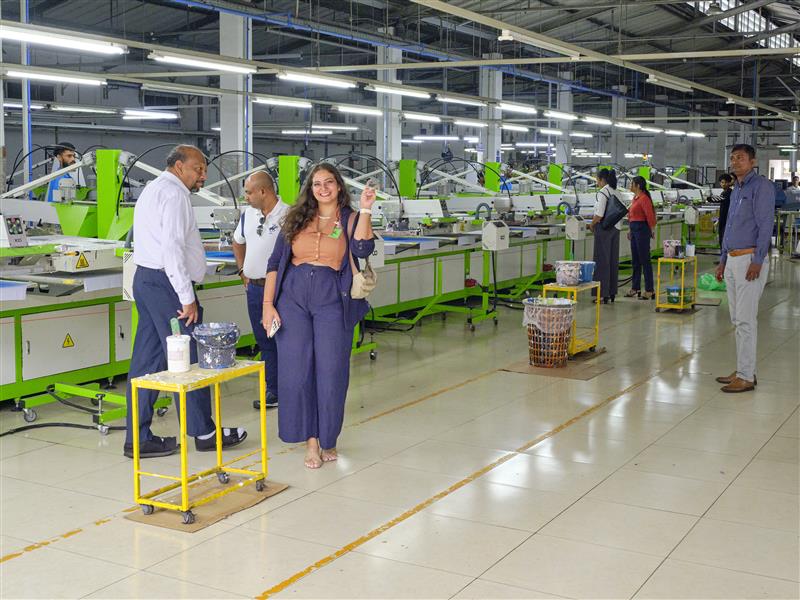
One area of particular strategic focus has been Heat Transfer technology, Screenline has developed systems that are capable of converting the majority of traditional screen-printing effects into Heat Transfers, improving repeatability tolerances, reducing chemical exposure, and enabling quicker turnaround. This approach has helped the business meet the growing global demand for detailed, lightweight, and high-performance garment graphics.
I asked Nishantha how they manage international market pressures?
Accessing global markets has not been without challenges. As Nishantha explained, exporting from Sri Lanka often involves limited direct access to brand designers and decision-makers, with much work routed through supply-chain intermediaries. This can slow approvals, extend sampling timelines, and reduce negotiation flexibility, issues familiar to many suppliers in competitive apparel clusters.
To remain resilient, Screenline has implemented several operational measures:
- Diversified sourcing and logistics planning to balance risks across regions
- Shipment consolidation and forecasting tools to stabilise lead times
- Automated production methods to maintain quality during demand fluctuations
- Structured customer communication to manage expectations during delays
These measures have helped the company deliver consistent service despite shifts in freight prices, tariffs, and global supply chain pressures.
I then asked about their attitude towards sustainability, is it a strategic priority or a compliance exercise?
Sustainability is a core focus and one of the most notable areas of progress within the business. Screenline has established a strong compliance foundation through externally validated certification schemes such as:
OEKO-TEX Standard 100, ZDHC Gateway, Higg Index, GRS (Global Recycle Standard), SMETA, GOTS and Greenhouse Gas verification.
These confirm to customers that the company operates with recognised environmental and social standards, a requirement that is growing in importance as brands prepare for regulations like the Digital Product Passport (DPP) and Corporate Sustainability Due Diligence (CS3D).
What else sets the company apart, however, is its investment in sustainable product innovation, not just compliance. Screenline has developed bio-based Heat Transfer systems using, Algae pigment which is produced from renewable biomass rather than petrochemical derivatives. It is also using tea pigment, created from processed Sri Lankan tea waste. Both technologies reduce dependency on conventional chemicals and align with the rising demand for low-impact garment decoration. The sustainability catalogue documents these products in detail and demonstrates their readiness for commercial use.
For printers exploring how to incorporate lower-impact chemistry into their portfolios, Screenline’s practical implementation offers a realistic model rather than a theoretical concept.
I then moved our conversation on to focus on People and Community.
Screenline employs more than 1,000 staff across facilities in Kelaniya, Katunayake, Kandy, and Pannala, with each site specialising in different aspects of screen printing, Heat Transfer production, and garment decoration. The management team places strong emphasis on employee development and community support, positioning itself as both a manufacturing organisation and a contributor to local economic stability.
During the visit, the professionalism of the production teams and the structured workflow across departments reflected a company that invests in training, cleanliness, and operational discipline factors that international buyers increasingly evaluate as part of supplier selection. This was reinforced as I was introduced to members of the production and quality assurance teams.
Nishantha was keen to explain how understanding and responding to customer trends is another key to success. The company’s brand portfolio includes names such as Adidas, Levi’s, GAP, H&M, Patagonia, Columbia, and Victoria’s Secret indicating its ability to meet diverse quality and compliance standards.
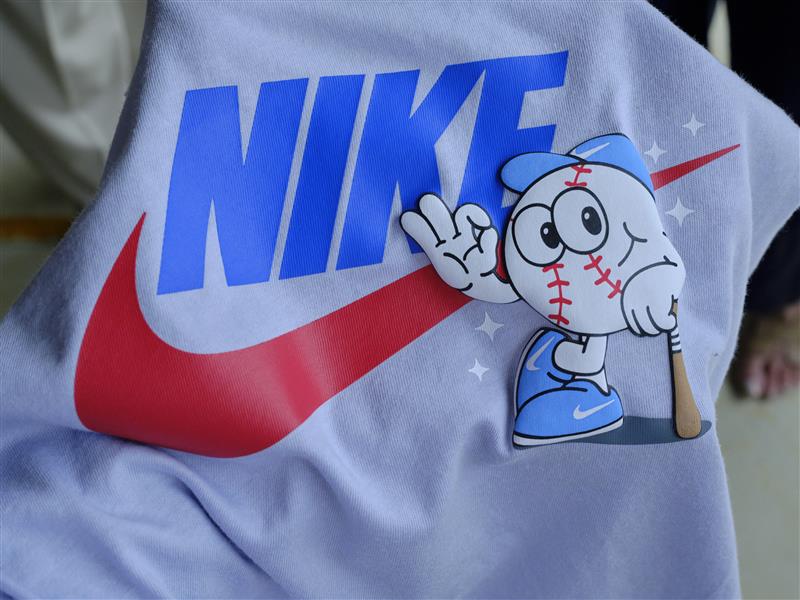
In recent seasons, Screenline has noticed several shifts in customer preferences:
- Increased demand for refined matte and metallic finishes
- Strong growth in performance-oriented effects such as high-stretch, silicone, and reflective prints
- Rising interest in tone-on-tone graphics and minimalist branding
- Growing requests for eco-friendly labels and water-based transfer systems
Hybrid screen and digital workflows are also becoming more attractive to brands seeking a balance of detail, durability, and shorter development timelines. Screenline’s R&D capability enables it to respond quickly to these requirements and introduce new finishes without extensive retooling.
I couldn’t leave without looking at how Nishantha sees future and opportunities for the print and apparel sector overall.
He responded bay saying that, “Our experience highlights several opportunities relevant to print specialists worldwide: Short-run, on-demand production will continue to expand as brands reduce their inventory. Hybrid digital/screen processes will continue to support faster sampling and personalisation”.
He added, “Sustainable print chemistry and transparent supply-chain reporting will become standard expectations. Without them in place it will not be possible to export into some markets like the EU!”
It is also clear that Heat Transfer systems will play a larger role in both fashion and performance apparel. Automation and data tracking will be essential for meeting compliance and cost pressures.
Screenline’s investments in automation, bio-based innovation, and diversified production give the company a solid platform to serve these emerging needs.
All of these developments over nearly three decades shows what can be achieved through steady investment, clear priorities, and a willingness to adapt. Its mix of creative capability, operational scale, technical discipline, and sustainability-focused product development has enabled it to maintain strong relationships with global brands while navigating competitive regional markets.
For screen and digital textile printers looking to strengthen their own businesses, Screenline offers a great case study of how to build resilience, upgrade production capability, and prepare for the industry’s next phase. I know that Nishantha is now launching a clothing label called Gaarda which can be seen at gaarda.lk.
If you are interested in learning more please email nish@screenlineholdings.com
This visit constituted a valued part of my experience of Sri Lanka and it was thanks to the hard work of FESPA member SLAP that I had such a rich experience.
Discover more content on textile printing